Understanding Personal Growth in the Modern World
What Is Personal Growth?
Personal growth is the intentional process of improving self-awareness, mindset, skills, and emotional well-being to live a more fulfilling life. In today’s fast-paced environment, personal growth is not limited to career success. It also includes mental clarity, emotional balance, and purposeful living.
Unlike traditional self-improvement, personal growth focuses on long-term transformation rather than quick results. It helps individuals align daily actions with values, goals, and inner peace.
Why Personal Growth Matters More Than Ever
Modern lifestyles often create stress, burnout, and lack of direction. Personal growth offers structure and clarity by helping people:
-
Understand strengths and weaknesses
-
Improve decision-making and confidence
-
Build resilience during challenges
-
Create healthier habits and routines
-
Develop emotional intelligence
When practiced consistently, personal growth supports both professional success and personal fulfillment.
Personal Growth vs Traditional Self-Improvement
| Aspect | Personal Growth | Traditional Self-Improvement |
|---|---|---|
| Focus | Long-term transformation | Short-term fixes |
| Mindset | Awareness and balance | Achievement-driven |
| Approach | Holistic development | Task-based improvement |
| Outcome | Sustainable life improvement | Temporary motivation |
The American Perspective on Personal Growth
In the USA, personal growth is increasingly viewed as essential rather than optional. People prioritize mental wellness, productivity, and emotional health alongside financial stability. This shift reflects a deeper understanding that success without inner stability leads to dissatisfaction.
Key Takeaway
Personal growth is a lifelong journey, not a destination. It empowers individuals to grow intentionally, stay adaptable, and create meaningful progress in every area of life.
The Core Foundations of Personal Growth
Self-Awareness as the Starting Point of Personal Growth
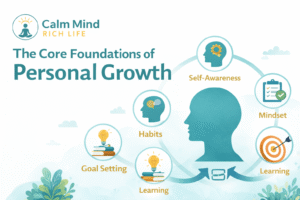
At the heart of personal growth lies self-awareness. Without understanding who you are, progress becomes random and unsustainable. Self-awareness allows individuals to recognize patterns, emotions, strengths, and limitations that shape daily decisions.
In the personal growth journey, self-awareness helps you respond thoughtfully instead of reacting emotionally. This creates clarity, emotional control, and intentional action.
Key elements of self-awareness include:
-
Understanding personal values and priorities
-
Recognizing emotional triggers
-
Identifying recurring habits and behaviors
-
Accepting strengths and weaknesses honestly
Mindset and Belief Systems
Mindset plays a critical role in personal growth. Your beliefs determine how you interpret challenges, success, and failure. Limiting beliefs often block progress, while empowering beliefs accelerate growth.
A healthy personal growth mindset focuses on learning, adaptability, and long-term improvement rather than perfection.
Emotional Intelligence and Personal Growth
Emotional intelligence supports personal growth by improving self-regulation, empathy, and communication. Individuals with strong emotional intelligence manage stress better and maintain balanced relationships.
Benefits include:
-
Improved emotional stability
-
Stronger personal and professional relationships
-
Better conflict resolution
-
Increased self-confidence
Comparison: Awareness-Based Growth vs Habit-Only Growth
| Aspect | Awareness-Based Personal Growth | Habit-Only Growth |
|---|---|---|
| Focus | Inner understanding | External actions |
| Sustainability | Long-lasting change | Short-term results |
| Emotional balance | High | Limited |
| Adaptability | Flexible and mindful | Rigid routines |
Key Insight
Strong foundations make personal growth sustainable. Without awareness, mindset clarity, and emotional intelligence, progress remains shallow and inconsistent.
Developing a Personal Growth Mindset for Long-Term Success
What Is a Growth-Oriented Personal Growth Mindset?
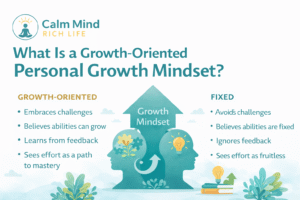
A growth-oriented personal growth mindset is the belief that abilities, intelligence, and emotional strength can improve through consistent effort and learning. This mindset encourages progress over perfection and views challenges as opportunities rather than obstacles.
People committed to personal growth understand that setbacks are part of development, not signs of failure. This mental shift creates resilience and long-term motivation.
Fixed Mindset vs Growth Mindset in Personal Growth
| Aspect | Fixed Mindset | Growth-Oriented Personal Growth Mindset |
|---|---|---|
| View on failure | Avoids failure | Learns from failure |
| Effort | Seen as pointless | Seen as necessary |
| Challenges | Feared | Embraced |
| Progress | Limited | Continuous |
A fixed mindset limits personal growth by reinforcing fear and self-doubt. A growth mindset expands possibilities by focusing on improvement and adaptability.
How Beliefs Shape Personal Growth Outcomes
Beliefs influence behavior. When individuals believe growth is possible, they take consistent action. Limiting beliefs often create self-sabotage, while empowering beliefs support confidence and persistence.
Common belief shifts that support personal growth include:
-
From “I cannot” to “I can learn”
-
From “This is too hard” to “This will help me grow”
-
From “Failure defines me” to “Failure teaches me”
Daily Practices to Strengthen a Personal Growth Mindset
Practical habits that reinforce personal growth include:
-
Reflecting on lessons learned each day
-
Reframing negative self-talk
-
Seeking feedback instead of validation
-
Setting learning-based goals
Key Takeaway
A growth-oriented personal growth mindset transforms challenges into fuel for progress. When mindset evolves, consistent improvement becomes natural and sustainable.
Setting Clear and Meaningful Goals for Personal Growth
Why Goal Setting Is Essential for Personal Growth
Goal setting gives personal growth direction and structure. Without clear goals, growth efforts often feel scattered and unproductive. Meaningful goals act as measurable checkpoints that keep motivation strong and progress visible.
In personal growth, goals are not about pressure. They are about clarity, focus, and alignment with personal values.
Aligning Goals With Purpose and Values
Goals that are disconnected from values lead to burnout and frustration. Value-based goals create sustainable personal growth because they reflect what truly matters.
Before setting goals, it is important to identify:
-
Core values and life priorities
-
Areas that require growth or balance
-
Long-term vision for mental and emotional well-being
When goals support values, commitment becomes natural rather than forced.
Short-Term vs Long-Term Personal Growth Goals
| Goal Type | Purpose | Impact on Personal Growth |
|---|---|---|
| Short-term goals | Build momentum | Quick confidence boost |
| Long-term goals | Create transformation | Sustainable life improvement |
| Skill-based goals | Increase capability | Personal empowerment |
| Mindset goals | Improve thinking patterns | Emotional stability |
Both short-term and long-term goals are essential for balanced personal growth.
Using the SMART Framework for Personal Growth
SMART goals help convert intention into action:
-
Specific: Clear and focused
-
Measurable: Trackable progress
-
Achievable: Realistic effort
-
Relevant: Value-aligned
-
Time-bound: Defined timeline
Key Insight
Effective goal setting transforms personal growth from a vague desire into a structured journey. Clear goals create accountability, direction, and consistent progress.
Building Positive Daily Habits for Sustainable Personal Growth
Why Habits Matter More Than Motivation in Personal Growth
Motivation is temporary, but habits create lasting personal growth. Relying only on motivation leads to inconsistency, while habits operate automatically and support progress even during low-energy periods.
In personal growth, habits shape identity. What you do daily defines who you become over time. Small actions, repeated consistently, produce meaningful transformation.
Understanding Habit Formation in Personal Growth
Habits follow a simple cycle: cue, action, reward. When this cycle is intentional, personal growth becomes effortless.
Effective habit-building principles include:
-
Starting small to reduce resistance
-
Attaching new habits to existing routines
-
Focusing on consistency over intensity
-
Tracking progress for accountability
Keystone Habits That Accelerate Personal Growth
Keystone habits influence multiple areas of life and strengthen overall personal growth.
Examples include:
-
Morning reflection or journaling
-
Daily movement or light exercise
-
Reading educational material
-
Mindful breathing or meditation
-
Evening planning and review
These habits improve focus, discipline, and emotional balance simultaneously.
Morning vs Evening Habits Comparison
| Habit Timing | Benefits for Personal Growth | Best Use |
|---|---|---|
| Morning habits | Mental clarity and focus | Productivity and discipline |
| Evening habits | Reflection and relaxation | Emotional balance and learning |
| Flexible habits | Adaptability | Long-term consistency |
Both morning and evening routines play a vital role in sustained personal growth.
Overcoming Common Habit-Building Challenges
Many people abandon habits due to unrealistic expectations. Personal growth improves when habits are flexible and aligned with lifestyle.
Helpful strategies include:
-
Reducing habit size during busy periods
-
Replacing missed days with reflection instead of guilt
-
Reinforcing progress through positive reinforcement
Key Takeaway
Positive habits are the backbone of personal growth. When habits align with goals and values, progress becomes natural, consistent, and sustainable.
Overcoming Fear, Self-Doubt, and Limiting Beliefs in Personal Growth
How Fear Blocks Personal Growth
Fear is one of the biggest obstacles to personal growth. It often appears as procrastination, avoidance, or overthinking. While fear is a natural response to uncertainty, allowing it to dominate decisions prevents progress and self-trust.
In personal growth, fear usually stems from the fear of failure, judgment, or change. Recognizing fear instead of ignoring it is the first step toward growth.
Understanding Self-Doubt and Limiting Beliefs
Self-doubt weakens confidence and creates hesitation. Limiting beliefs are deeply rooted thoughts that define what individuals believe is possible.
Common limiting beliefs affecting personal growth include:
-
Believing success is meant for others
-
Associating mistakes with personal failure
-
Feeling unqualified to improve or grow
-
Assuming change is too difficult
These beliefs operate subconsciously and shape behavior until challenged.
Reframing Fear Through Personal Growth Practices
Fear can be transformed into growth when reframed as feedback rather than threat. Personal growth increases when fear is viewed as evidence of stepping outside comfort zones.
Effective reframing techniques include:
-
Asking what can be learned from the situation
-
Breaking challenges into manageable steps
-
Visualizing success alongside effort
-
Replacing negative assumptions with realistic perspectives
Comparison: Fear-Driven Thinking vs Growth Oriented Thinking
| Aspect | Fear-Driven Thinking | Personal Growth Thinking |
|---|---|---|
| Focus | Avoiding risk | Learning and improvement |
| Decision-making | Reactive | Intentional |
| Emotional state | Anxiety and doubt | Confidence and resilience |
| Outcome | Stagnation | Continuous progress |
Key Insight
Overcoming fear and self-doubt strengthens personal growth by building confidence, clarity, and emotional resilience. Growth begins when fear is acknowledged but not obeyed.
Mindfulness and Emotional Balance in Personal Growth
The Role of Mindfulness in Personal Growth
Mindfulness is the practice of staying fully present and aware of thoughts, emotions, and actions. In personal growth, mindfulness creates clarity by reducing mental noise and emotional overwhelm. It allows individuals to respond intentionally instead of reacting impulsively.
Mindful awareness strengthens personal growth by improving focus, emotional regulation, and self-control.
Emotional Balance as a Core Element of Personal Growth
Emotional balance does not mean avoiding negative emotions. It means understanding emotions without being controlled by them. Personal growth improves when individuals learn to process emotions in a healthy way.
Key emotional balance skills include:
-
Identifying emotional triggers
-
Regulating stress responses
-
Practicing emotional acceptance
-
Developing patience and self-compassion
Simple Mindfulness Practices for Daily Personal Growth
Mindfulness does not require complex routines. Simple practices support consistent personal growth:
-
Conscious breathing for mental clarity
-
Body awareness during daily activities
-
Mindful listening in conversations
-
Short reflection pauses throughout the day
These practices help create calmness and mental stability.
Comparison: Mindful Living vs Reactive Living
| Aspect | Mindful Living | Reactive Living |
|---|---|---|
| Awareness | Present and intentional | Distracted and impulsive |
| Emotional control | Balanced | Overwhelmed |
| Stress management | Effective | Inefficient |
| Personal Growth impact | Sustainable | Inconsistent |
Mindful living supports long-term personal growth by promoting awareness and emotional intelligence.
Managing Stress Through Personal Growth
Stress becomes harmful when unmanaged. Personal growth includes learning how to manage stress without avoidance.
Effective stress-management strategies include:
-
Setting emotional boundaries
-
Prioritizing rest and recovery
-
Practicing gratitude regularly
-
Reducing unnecessary mental clutter
Key Takeaway
Mindfulness creates emotional balance, which is essential for meaningful personal growth. A calm mind supports clear decisions, healthy relationships, and consistent progress.
Improving Self-Discipline and Focus for Personal Growth
Why Self-Discipline Drives Personal Growth
Self-discipline is the ability to act in alignment with long-term goals despite short-term discomfort. In personal growth, self-discipline creates consistency, structure, and momentum. Without discipline, even the best intentions fail to produce results.
Unlike motivation, self-discipline supports personal growth during challenging periods by reinforcing commitment and accountability.
Understanding Focus in the Digital Age
Modern distractions weaken focus and slow personal growth. Constant notifications, multitasking, and information overload reduce attention span and mental clarity.
Strengthening focus helps individuals:
-
Complete tasks efficiently
-
Improve decision-making
-
Reduce stress and overwhelm
-
Increase productivity and confidence
Practical Strategies to Strengthen Self-Discipline
Effective personal growth strategies for discipline include:
-
Creating clear daily priorities
-
Designing structured routines
-
Eliminating unnecessary distractions
-
Using time-blocking for deep work
-
Practicing delayed gratification
Discipline improves when actions are planned rather than emotionally driven.
Focused Action vs Multitasking Comparison
| Aspect | Focused Action | Multitasking |
|---|---|---|
| Efficiency | High | Low |
| Mental clarity | Strong | Fragmented |
| Stress levels | Lower | Higher |
| Personal Growth impact | Consistent | Unstable |
Focused action strengthens personal growth by producing higher-quality results with less mental exhaustion.
Building Attention Control for Long-Term Personal Growth
Attention control is a skill developed through practice. Techniques such as mindful single-tasking and scheduled breaks improve mental endurance.
Helpful focus-building habits include:
-
Working in distraction-free environments
-
Using short, focused work intervals
-
Reflecting on productivity patterns
Key Insight
Self-discipline and focus act as multipliers for personal growth. When attention and effort are controlled, progress becomes intentional and measurable.
Personal Growth Through Self-Reflection and Awareness
Why Self-Reflection Is Essential for Personal Growth
Self-reflection is the process of intentionally reviewing thoughts, actions, and outcomes to gain insight. In personal growth, reflection transforms experience into wisdom. Without reflection, individuals repeat patterns without understanding results.
Consistent self-reflection strengthens personal growth by improving self-awareness, accountability, and decision-making.
How Reflection Supports Continuous Personal Growth
Reflection creates space for learning. It allows individuals to evaluate what is working and what needs adjustment.
Key benefits include:
-
Increased clarity about goals and values
-
Improved emotional intelligence
-
Better problem-solving abilities
-
Stronger alignment between intention and action
Through reflection, personal growth becomes adaptive rather than rigid.
Journaling as a Tool for Personal Growth
Journaling is one of the most effective reflection tools. It externalizes thoughts and creates mental clarity.
Effective journaling practices include:
-
Writing daily reflections on experiences
-
Tracking emotional patterns
-
Reviewing weekly wins and challenges
-
Identifying lessons from setbacks
Journaling supports personal growth by making progress visible and measurable.
Reflection vs Avoidance Comparison
| Aspect | Self-Reflection | Avoidance |
|---|---|---|
| Awareness | High | Low |
| Emotional clarity | Strong | Suppressed |
| Learning | Continuous | Limited |
| Personal Growth impact | Sustainable | Stagnant |
Reflection strengthens personal growth by promoting conscious improvement.
Key Takeaway
Self-reflection turns everyday experiences into growth opportunities. When reflection becomes a habit, personal growth accelerates naturally and consistently.
The Role of Environment and Relationships in Personal Growth
How Environment Shapes Personal Growth
Environment influences behavior, mindset, and emotional health. In personal growth, surroundings either support progress or reinforce limitations.
Elements of a growth-supportive environment include:
-
Organized and calming spaces
-
Reduced exposure to negativity
-
Access to learning resources
-
Time structures that support focus
A healthy environment reinforces positive habits and clarity.
Relationships and Their Impact on Personal Growth
Relationships significantly affect personal growth. Supportive relationships encourage accountability, confidence, and motivation. Toxic relationships create stress and self-doubt.
Signs of growth-supportive relationships include:
-
Mutual respect and encouragement
-
Honest communication
-
Shared values and growth mindset
-
Emotional safety
Supportive vs Toxic Influences Comparison
| Aspect | Supportive Environment | Toxic Environment |
|---|---|---|
| Emotional Impact | Empowering | Draining |
| Motivation | Encouraged | Suppressed |
| Confidence | Strengthened | Undermined |
| Personal Growth Outcome | Accelerated | Restricted |
Key Insight
Optimizing environment and relationships strengthens personal growth by reducing friction and reinforcing healthy behavior.
Continuous Learning and Skill Development for Personal Growth
Lifelong Learning as a Pillar of Personal Growth
Continuous learning keeps personal growth dynamic and relevant. Learning expands perspective, adaptability, and confidence.
Learning-based personal growth includes:
-
Reading educational content
-
Developing professional and personal skills
-
Seeking mentorship and feedback
-
Applying knowledge consistently
Skill Development and Self-Empowerment
Skills improve self-reliance and adaptability. Each new skill increases confidence and decision-making ability.
Learning vs Passive Consumption Comparison
| Aspect | Active Learning | Passive Consumption |
|---|---|---|
| Engagement | High | Low |
| Retention | Strong | Weak |
| Application | Practical | Minimal |
| Personal Growth Impact | Transformational | Limited |
Key Takeaway
Learning fuels personal growth when knowledge is applied intentionally and consistently.
Measuring Progress and Staying Consistent in Personal Growth
Tracking Progress in Personal Growth
Progress tracking keeps personal growth focused and motivating.
Effective tracking methods include:
-
Weekly self-assessments
-
Habit trackers
-
Goal reviews
-
Emotional check-ins
Consistency Over Perfection
Consistency sustains personal growth. Progress improves when effort is steady rather than intense but short-lived.
Consistent Growth vs Inconsistent Effort Comparison
| Aspect | Consistent Effort | Inconsistent Effort |
|---|---|---|
| Momentum | Stable | Unpredictable |
| Motivation | Sustainable | Temporary |
| Results | Long-term | Short-term |
| Personal Growth Impact | Reliable | Fragile |
Key Insight
Measuring progress and maintaining consistency transforms personal growth into a lifelong system rather than a temporary phase.
Creating a Balanced and Fulfilled Life Through Personal Growth
Integrating Personal Growth Into Everyday Life
True personal growth integrates into daily living rather than existing as a separate task. Growth becomes sustainable when aligned with lifestyle.
Balancing Ambition and Inner Peace
Personal growth thrives when ambition and emotional well-being coexist. Growth without balance leads to burnout.
Final Thought
Personal growth is a continuous journey of awareness, learning, and intentional action. Small daily improvements create lasting transformation.
FAQs on Personal Growth
-
What is personal growth and why is it important?
Personal growth is the process of improving mindset, skills, and emotional awareness to create a balanced and fulfilling life. -
How long does personal growth take?
Personal growth is ongoing and evolves throughout life rather than following a fixed timeline. -
Can personal growth improve mental health?
Yes, personal growth supports emotional balance, self-awareness, and stress management. -
What is the best way to start personal growth?
Start with self-awareness, small habits, and clear goals aligned with values. -
How does mindfulness support personal growth?
Mindfulness improves emotional regulation, focus, and intentional decision-making. -
Can personal growth help with career success?
Yes, personal growth strengthens discipline, confidence, communication, and adaptability. -
How do I stay consistent with personal growth?
Consistency improves through realistic habits, progress tracking, and reflective practices.